The Hague Academy of International Law
Asian Academy of International Law
Hong Kong International Legal Talents Training Academy
Bank of China (Hong Kong)
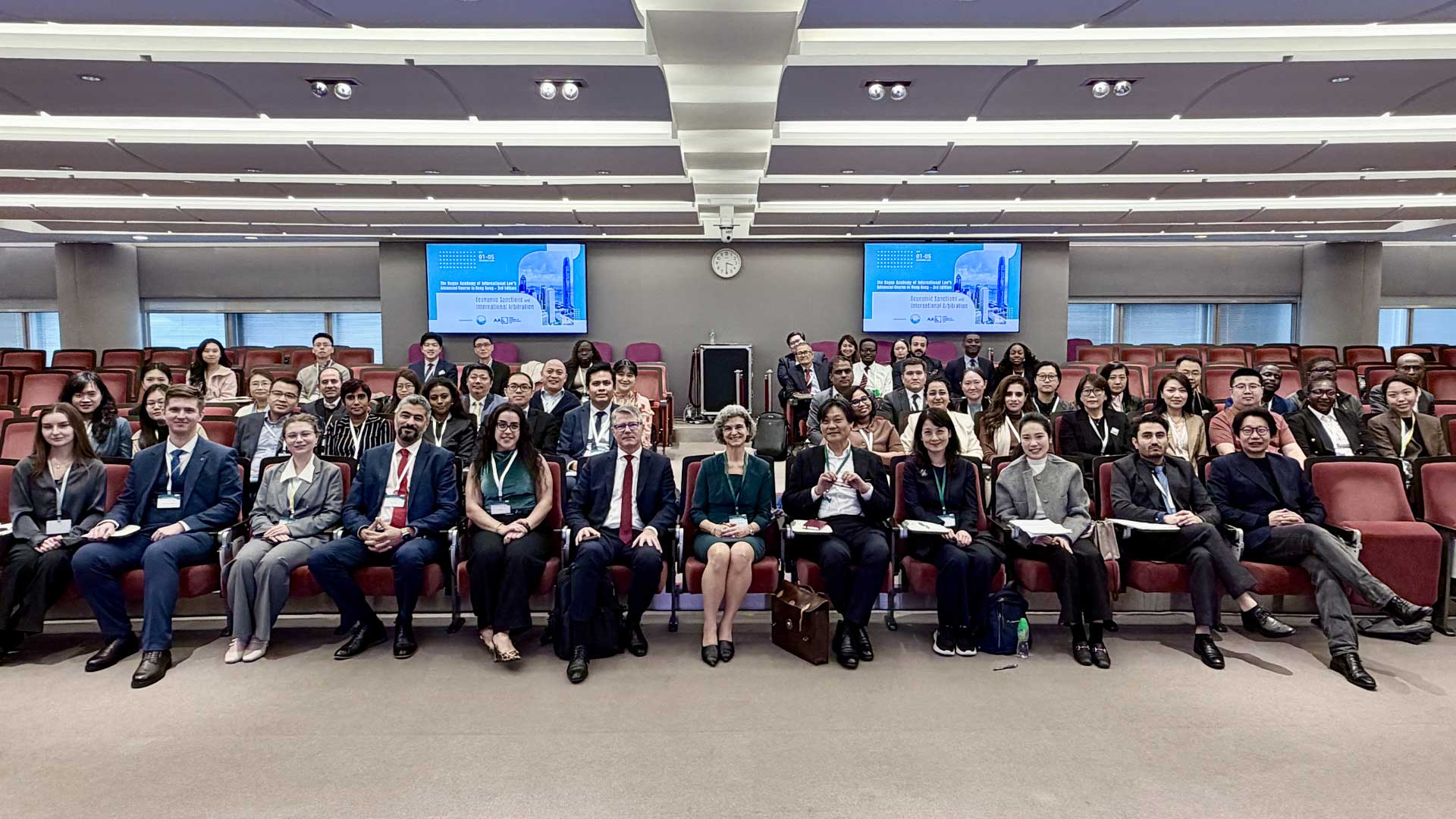
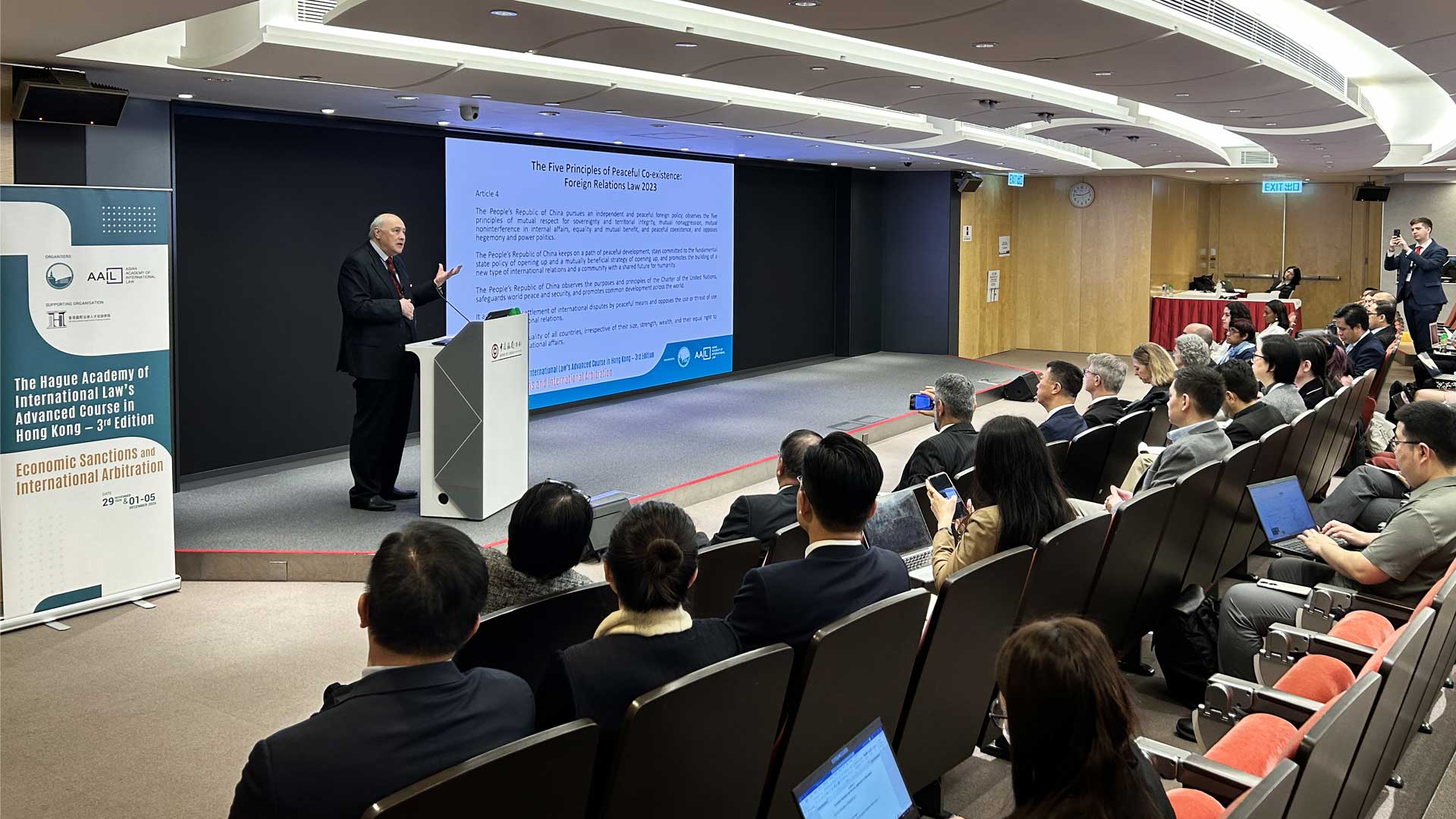
The 3rd Edition of The Hague Academy of International Law’s Advanced Course in Hong Kong concluded its six-day programme on 5 December 2025. Bringing together 144 participants from 33 jurisdictions to the first day’s Introductory Course and 63 participants from 28 jurisdictions to the Full Course, the Course offered an in-depth and multifaceted exploration of one of the most consequential topics in contemporary international law, i.e. the expanding role of economic sanctions.
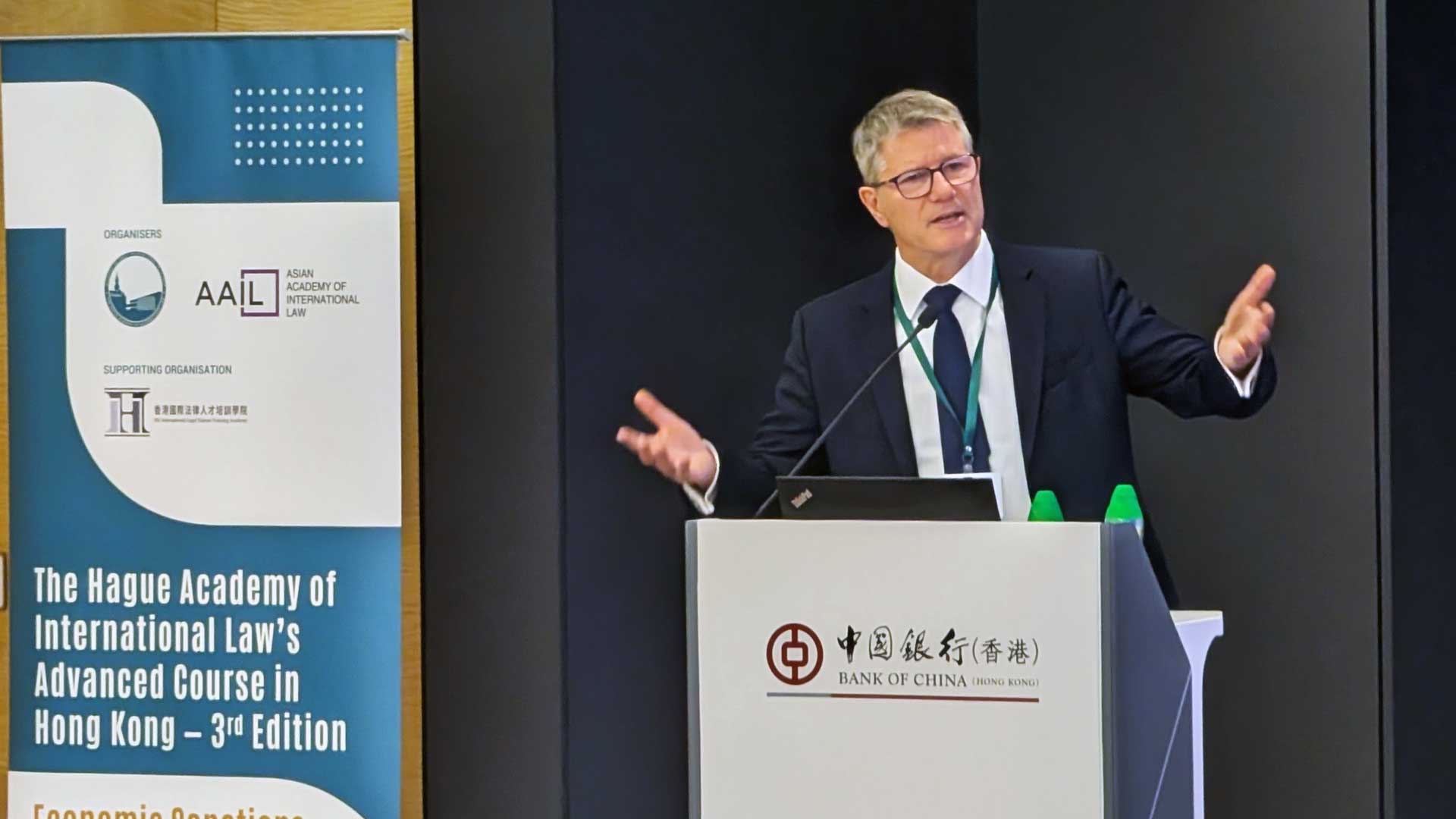
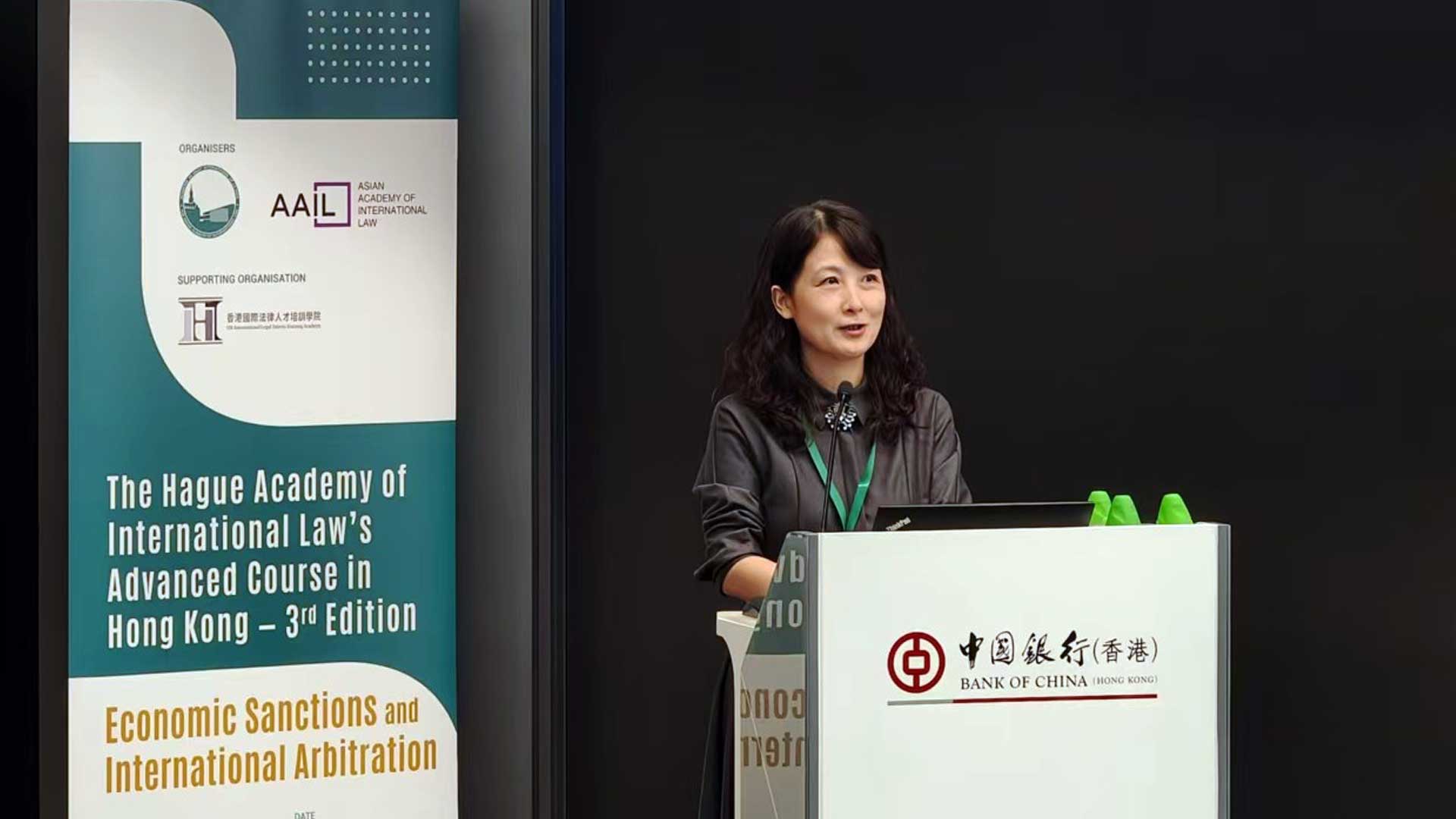
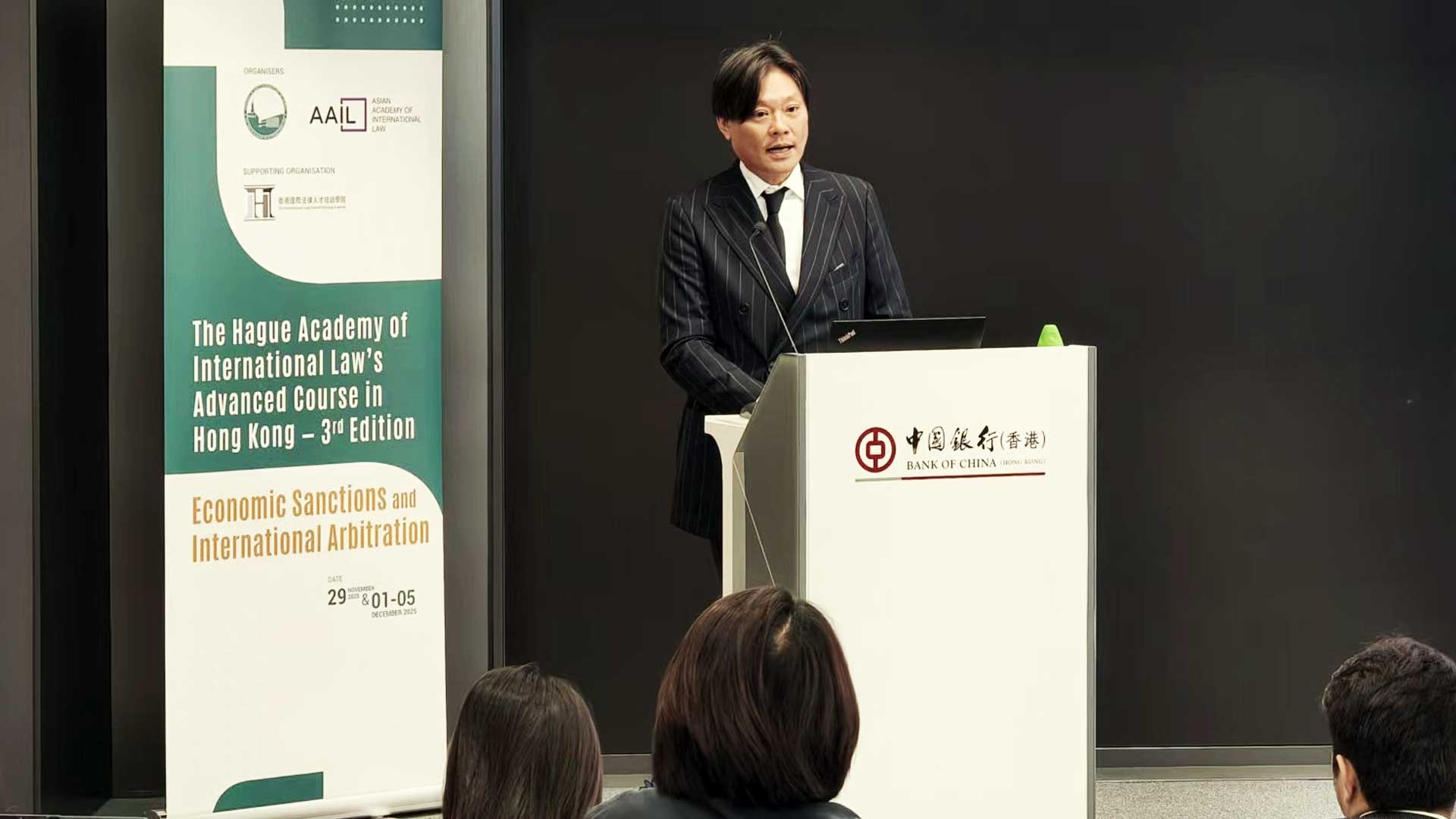
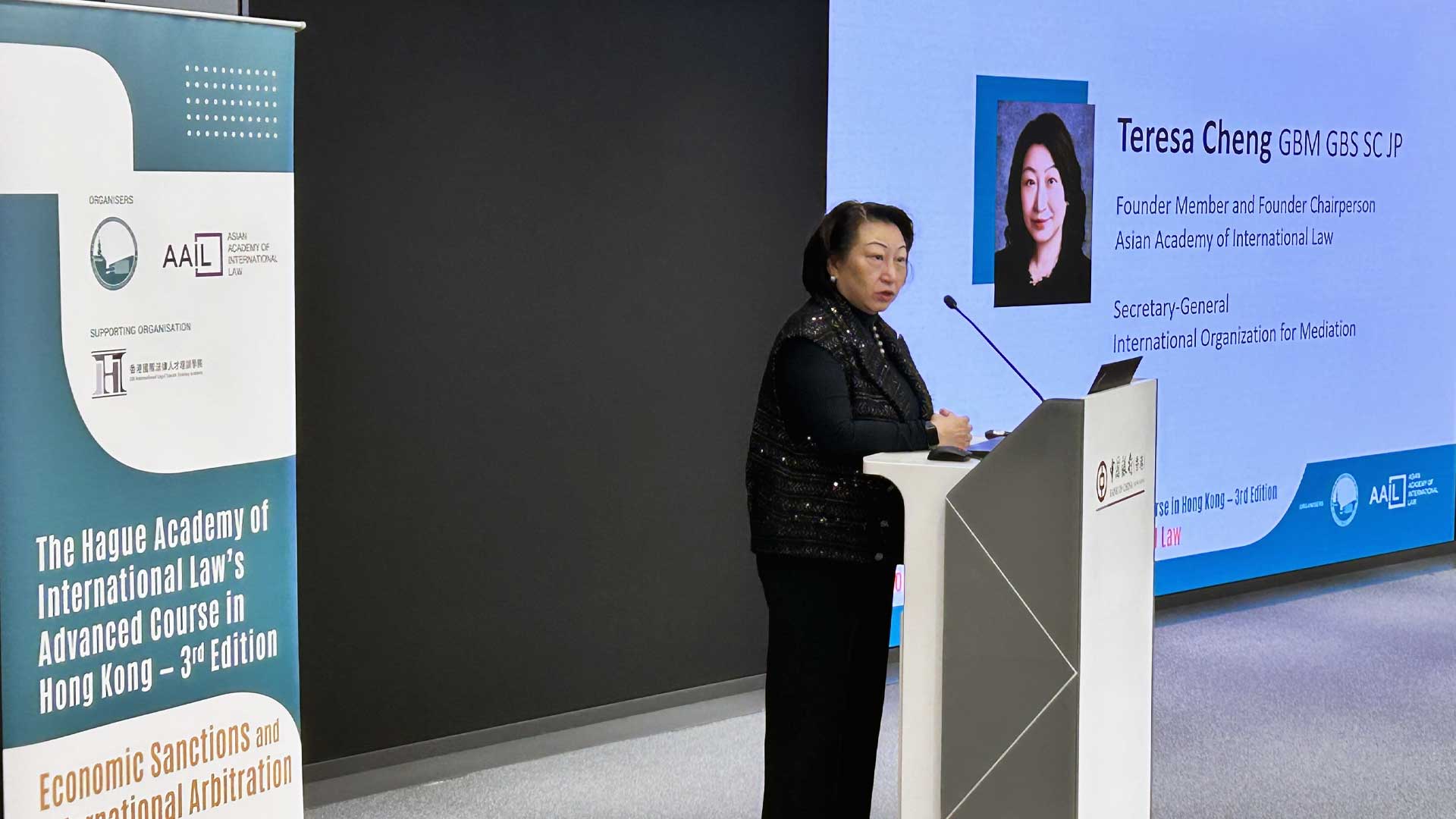
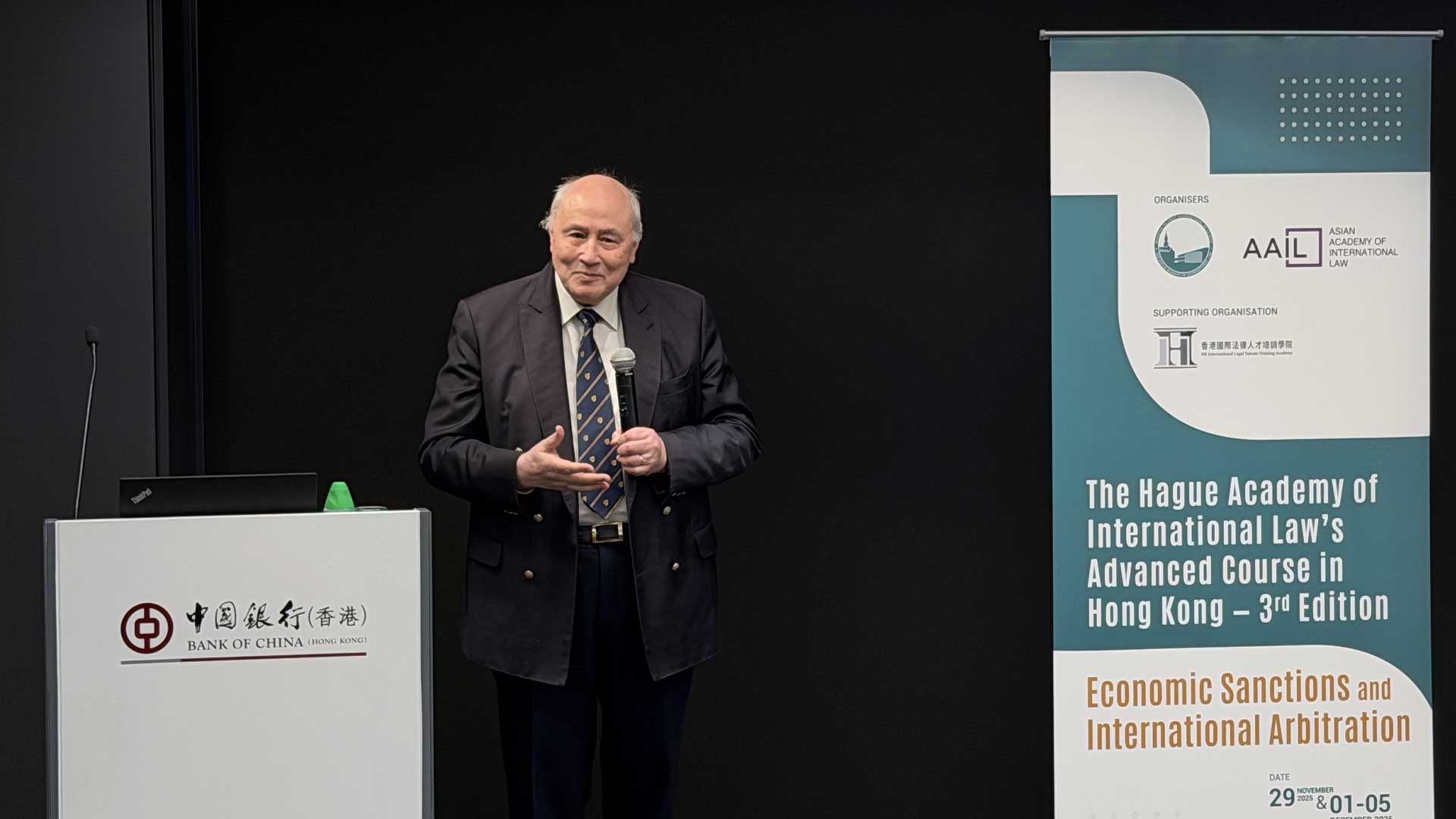
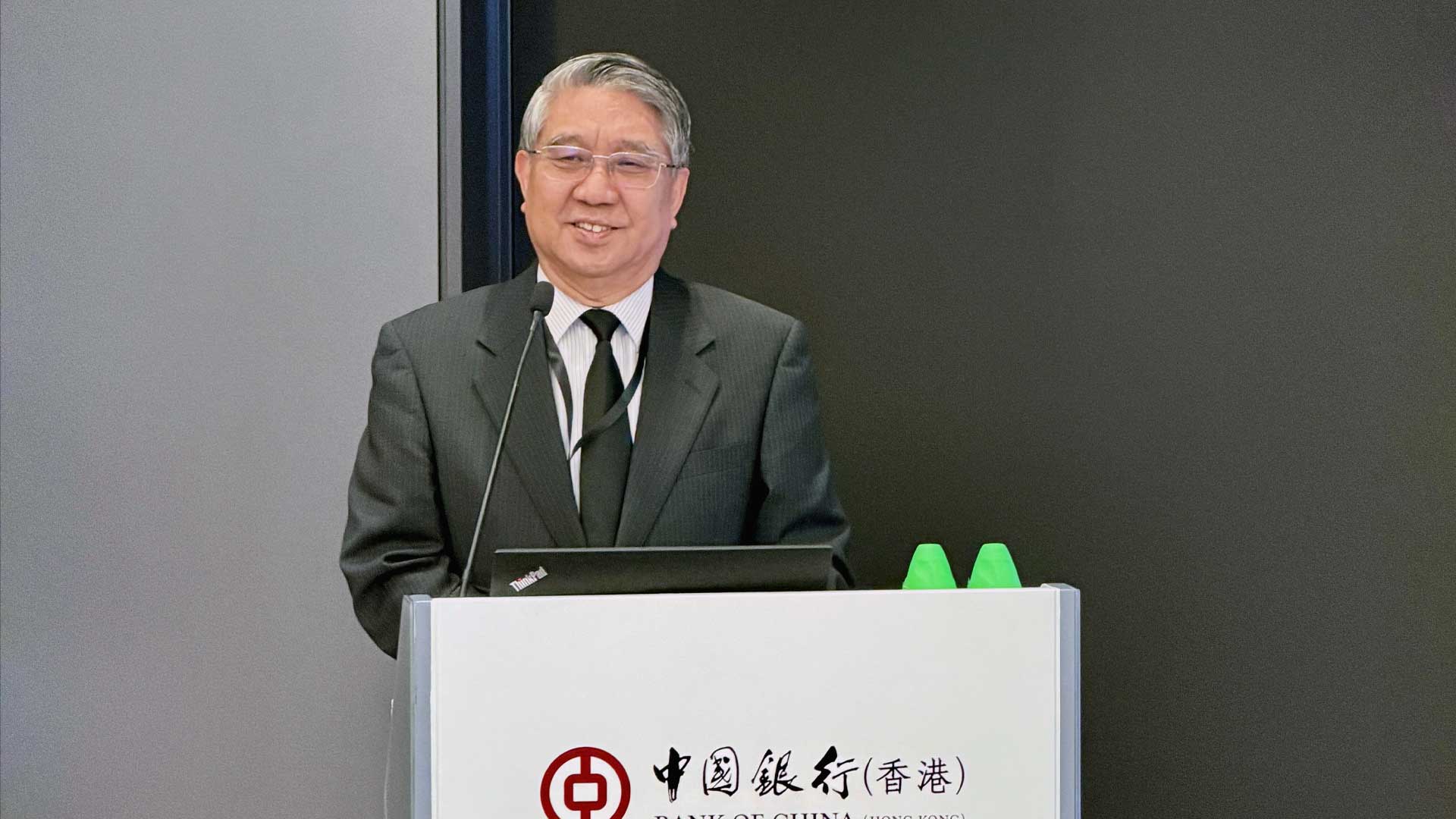
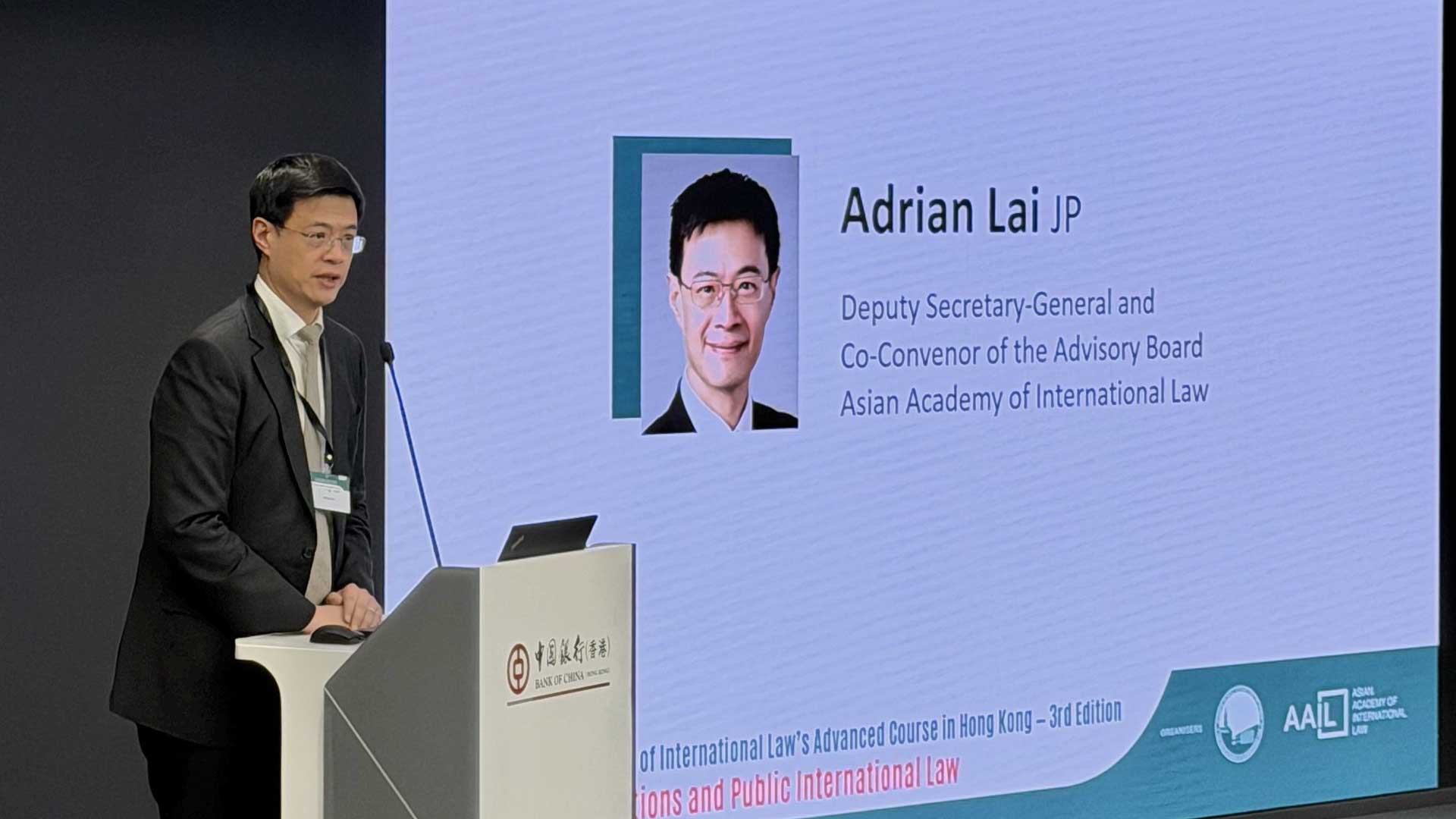
The Opening Ceremony reaffirmed Hong Kong’s position as a leading centre for advanced legal education. Remarks delivered by AAIL leadership highlighted the centrality of international dialogue in an era in which unilateral coercive measures increasingly test the boundaries of the international legal order. In those six days, the Course featured an exceptional line-up of distinguished scholars. Professor Jean-Marc Thouvenin (The Hague Academy of International Law) provided a rich conceptual and historical framework for understanding sanctions, tracing their evolution from ancient practice to complex modern regimes, and examining their legality under international law. Professor Caroline Kleiner (Université Paris Cité) analysed how sanctions affect arbitration agreements, procedural frameworks, and the merits, while Professor Franco Ferrari (New York University) offered a comparative examination of sanctions as overriding mandatory rules and their profound influence on contract law, including doctrines of illegality, force majeure, and CISG Article 79. The programme also addressed investment treaty law and access to justice. Professor Danni Liang (Sun Yat-Sen University) examined how sanctions intersect with bilateral investment treaties, touching on MFN clauses, sunset clauses, host-State defences and the interpretative challenges arising from politically driven measures. Professor Chin Leng Lim (The Chinese University of Hong Kong) discussed the obstacles that sanctions create for arbitral access, from jurisdictional objections to the unpredictability of sanctions-driven procedural disruptions. The Course concluded with Professor Giuditta Cordero-Moss’s (University of Oslo) reflections on sanctions as overriding mandatory rules and their interaction with public policy and judicial control.
• This course put the legal doctrines into practical situations and Professors always have different frameworks to conceptualise it and present it in a very creative and clear way. I indeed learned a lot from this course. Highly appreciated!
• The contents and the explanations were beyond my expectations. Contents were well aligned and the respected Professors were well prepared and knowledgeable. Most importantly they were well equipped with cases and real examples which made it more interesting and informative.
• The provided materials and presentations were very well prepared and better than I had expected!
• Each lecture was prepared in accordance with the lecturer’s own style, which was very good.